Climate Finance Is Booming. Women Are Still an Afterthought.
The future of climate finance is gender-smart. The question is how long the rest of the field takes to catch up.
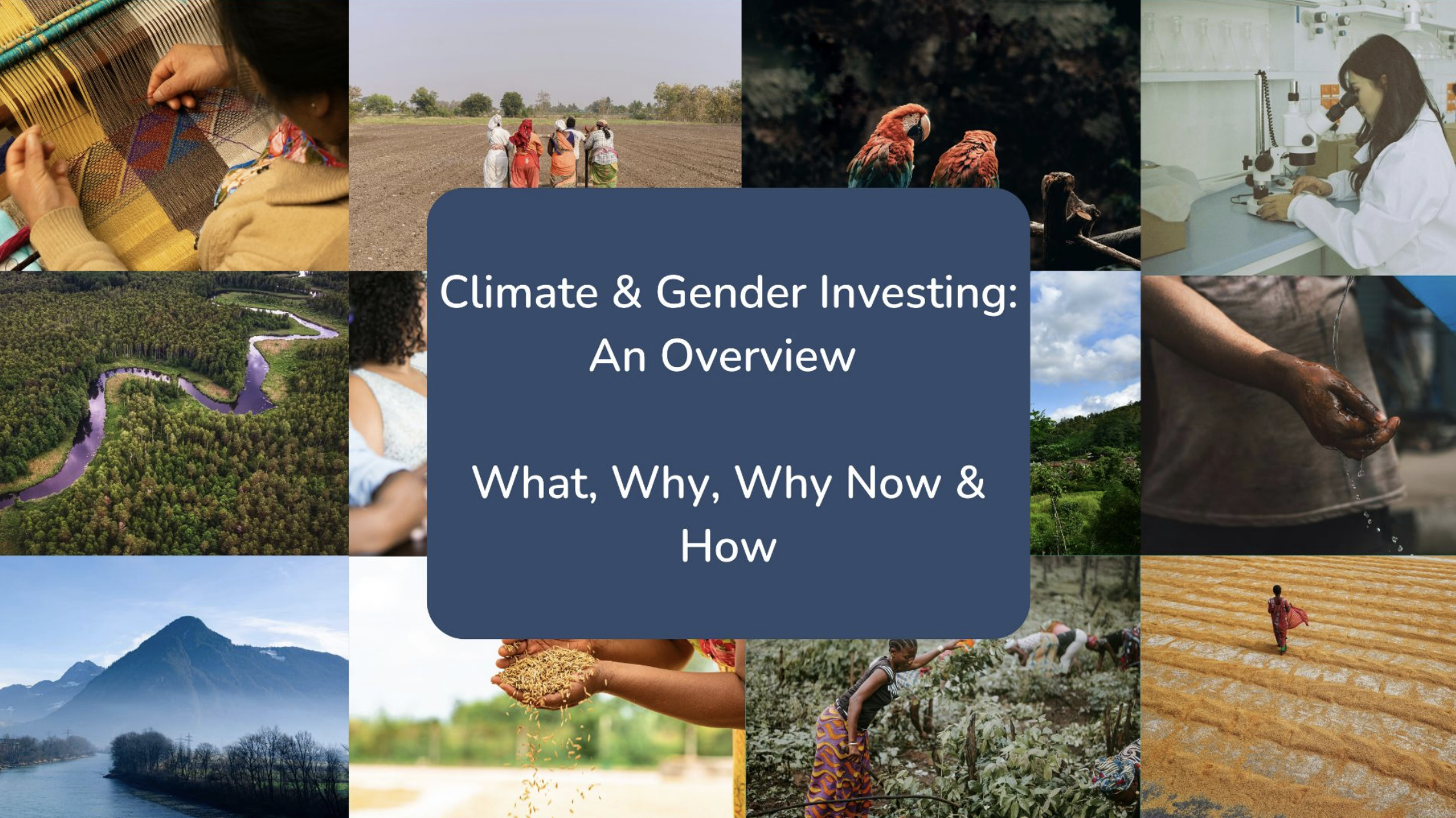
Heading for Change just released a resource I wish every funder, investor, and health leader would sit with: "Climate & Gender Investing: An Overview." It lays out, plainly and practically, what it means to put a gender lens on climate capital and why leaving that lens off is both a moral failure and a financial one.
A few numbers stood out: Climate finance reached $1.9 trillion in 2023 — yet of 551 climate-related blended finance deals worldwide, only 22% qualify as gender-responsive. A vanishingly small share of overseas development assistance 0.01% reaches the intersection of climate adaptation and gender. Meanwhile, climate change could push 158 million more women and girls into poverty by 2050.
We are moving historic sums of money to address the defining crisis of our time, and we are largely ignoring the people who bear its heaviest burden and who are, in community after community, already leading the response.
What I appreciate most about this deck is that it refuses to treat gender as a reporting checkbox. It offers a spectrum from gender-unaware to gender-transformative and asks investors to locate themselves honestly on it. Tailoring a product for women farmers is a start. Addressing the structural barriers they face land rights, financing access, decision-making power is the real work.
And the business case is not soft. The deck compiles the evidence: an estimated $14 trillion unlocked in the green economy by addressing climate and social risks together. Every dollar invested in adaptation and resilience in emerging markets returning roughly ten. Farm yields rising as much as 30% if women smallholders received equal resources. Gender-balanced investment teams showing no penalty on returns and meaningfully lower write-off rates.
The health sector applications hit closest to home for me: parametric heat insurance, climate-resilient clinics, mobile care, disease surveillance. These aren't abstractions. They are the difference between a health system that bends under climate shocks and one that breaks.
For anyone allocating capital, the deck closes with the questions that matter: Does your theory of change name both climate and gender? Does your risk analysis capture how climate, gender, and social risks compound one another? Are you measuring gender-disaggregated climate outcomes or filing gender and climate in separate reports? Those who stay on the sidelines of gender-smart climate investing aren't playing it safe. They're leaving value, resilience, and impact on the table.
https://lnkd.in/gUBWvV9t
#ClimateFinance#GenderLensInvesting#GlobalHealth#ClimateResilience#WomensHealth#WMM#projectdandelion